

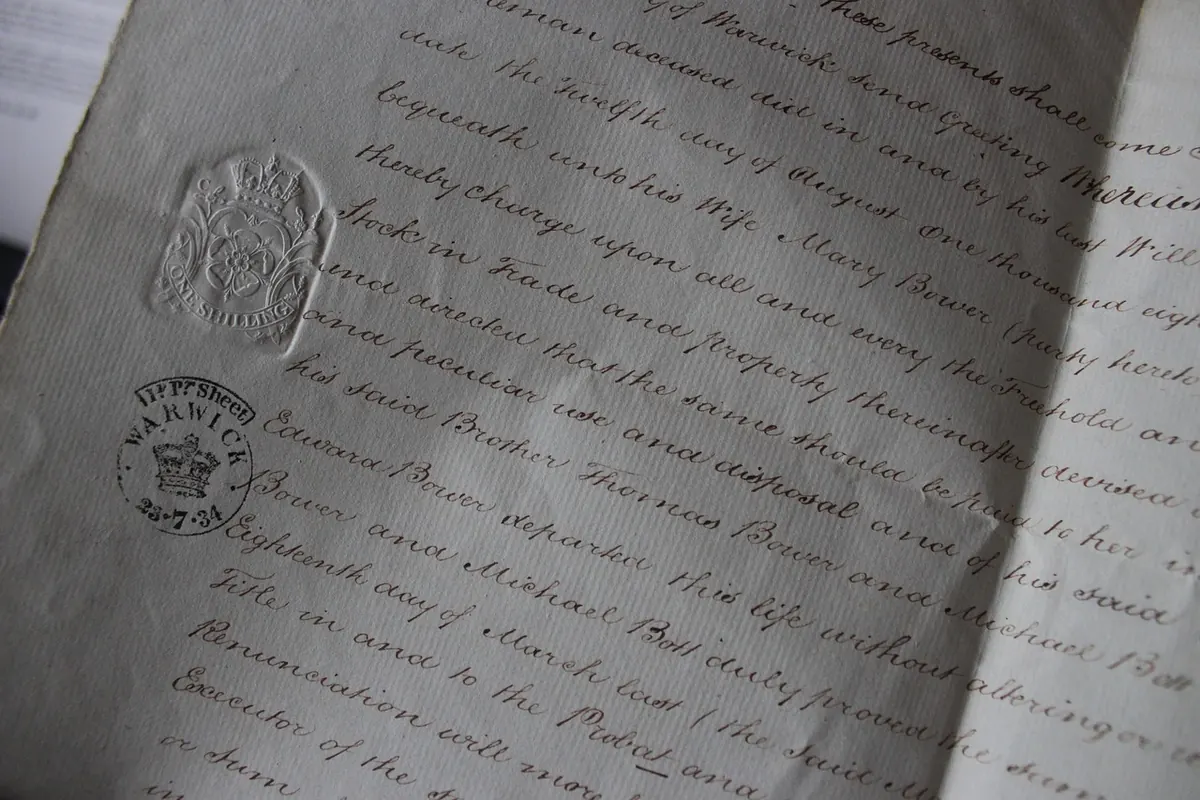
The email arrives on a Friday with the subject line "Contract attached". Fourteen pages, single-spaced, full of definitions of "Net Receipts", "the Territory" and "the Work". None of it is written to trick you. It is written to protect the publisher, which is a different job from protecting you. Reading it properly takes an evening. Knowing which four or five clauses decide whether the deal is actually good takes about an hour.
Start with the grant of rights, not the money
The grant clause is the engine of the contract. Everything else is plumbing. It tells you what you are giving away, for how long, and where. Read it as three separate questions.
What? Print, ebook, audio, large print, translation, film and television, serial, merchandising. A contract that takes "all rights in all formats" is taking a great deal; one limited to a single format leaves you room to place the rest yourself.
Where? UK and Commonwealth, English language worldwide, world, or world excluding certain territories. World rights in all languages is the widest grant there is, and it is worth asking whether the publisher can genuinely sell into every market it is claiming.
How long? A fixed term of five or seven years is a negotiation. "The life of copyright" means the duration of your copyright: in the UK, that is your lifetime plus seventy years. That is a very long time to be locked into a bad partnership.
Licence or assignment?
A licence is permission to publish. An assignment transfers ownership of the copyright itself. Under the Copyright, Designs and Patents Act 1988, an assignment must be in writing and signed by or on behalf of the person giving it away, so a phrase like "the Author hereby assigns" is doing something much bigger than "the Author hereby licenses". Either can be legitimate, but know which one you are signing.
Royalties: the number matters less than the base
Authors fixate on the percentage. The base it is calculated on changes the money far more. Take a paperback priced at £10 with a 10% royalty. If the base is the published price, you earn £1.00 a copy. If the base is "net receipts" and the publisher sells to a retailer at a 50% trade discount, receipts are £5.00 and 10% of that is 50p. If the definition of net receipts also deducts returns, freight and "other customary deductions", it drops further still. Find the definition and read it twice.
Then look for the moving parts around it:
- Escalation by format. Hardback, paperback, ebook and audio usually carry different rates on different bases. Ebook royalties are often expressed as a share of net receipts, which is a smaller base than a print royalty on published price.
- High-discount sales. Many contracts pay a reduced rate, or nothing, on copies sold at very large discounts. Check where the threshold sits.
- The advance. Note when it is paid, usually in instalments on signature and delivery or acceptance, and whether it is refundable if you never deliver.
- Statements and reserves. Most publishers report twice a year with a payment window of two to four months, and hold back a reserve against returns. Look at the period covered and any minimum threshold below which payment rolls over.
- The audit clause. This is your only real check on the maths. A short window to inspect the publisher's records, and a clause making you pay for the audit unless a substantial discrepancy is found, is worth pushing back on.
Subsidiary rights: check the split and the reversion
Translation, audio, book club, serial, film and television deals sit under subsidiary rights, each with its own split between publisher and author. Splits vary widely between houses and contracts, and the headline percentage is not the whole story. The second question is what happens to a right the publisher never sells. Ask for unsold subsidiary rights to revert to you after a stated period, twelve or twenty-four months, so you can place them elsewhere rather than watching them sit idle.
Reversion: how do you get your rights back?
This is the clause that decides whether the book is yours again in ten years. The classic trap is a reversion clause that triggers only when the work is "out of print", defined as no copies in the publisher's warehouse. A print-on-demand listing or a stray ebook edition can keep a title technically in print forever.
Better wording ties reversion to availability: rights revert if the work is not for sale in all granted formats, or on your written request after a set number of years if royalties in a given period fall below a stated minimum. Push for a self-executing clause: you send notice, and if the publisher does not respond or reissue within a set number of days, rights revert automatically without further action.
Cover failure to publish too. If the publisher does not bring the book out within an agreed period after acceptance, rights should return to you, and the question of whether you keep the advance should be answered in the contract rather than left to goodwill.
The UK legal basics that shape the rest
- Copyright in a literary work is automatic and lasts for your lifetime plus seventy years.
- Moral rights include the right to be identified as the author, which you must assert in writing, and the right to object to derogatory treatment of your work. You can waive them. Think hard before you do.
- Warranties and indemnities are your promises that the work is original, does not infringe anyone's rights and is not defamatory. Try to cap your liability and tie it to the sums you have actually received.
- Check whether the publisher can assign the contract to another company without telling you. Ask to be notified, and ask that the terms cannot be made worse if it happens.
- Public Lending Right and Authors' Licensing and Collecting Society payments sit outside your contract but alongside it. Register for both.
Red flags worth slowing down for
- A perpetual grant of all rights in all formats and territories with no reversion route.
- "Net receipts" that are never defined, or defined with an open-ended list of deductions.
- No audit rights, or an audit window of under a year.
- An option clause binding your next book to the same publisher on the same terms.
- An uncapped indemnity, or a clause letting the publisher deduct legal costs from your royalties.
- Charges for editing, cover design or marketing deducted from your earnings.
- A request to waive moral rights without explanation.
How to read it in one sitting
- Read once for shape. Note the parties, the grant, the term, the territory, the formats and the advance.
- Read again only the money clauses: royalty base, rates per format, statement dates, reserves and audit.
- Highlight every "sole discretion", "customary" and "including but not limited to". Those phrases are where the pressure points hide.
- Write a one-page summary of the deal in your own words, then check it against the actual clauses. The gaps are what you have misunderstood.
- Do not sign on the spot. Ask for a reasonable window. Agents and the Society of Authors contract-vetting service exist for exactly this stage.
- Once signed, diarise the reversion trigger dates and the statement dates. A clause you forget is a clause you cannot use.
This is general guidance, not legal advice. Contracts are negotiable documents, and what suits one author may be wrong for another. If the deal involves meaningful money, a long term or a wide grant of rights, an hour with a publishing solicitor is money well spent.
Photo: mzmatuszewski0 / Pixabay